
Bst Book

"We can’t build thriving health on a foundation of poor breathing. When we shift the clinical lens to airway health, we can change lives—starting in childhood."

— Dr. Shereen Lim

What If the Root Cause Has Been There All Along?

You’re seeing it every day:

  • Kids with snoring, reflux, ADHD diagnoses, picky eating, teeth grinding, glue ear, speech delays, anxiety, behavioural challenges.
  • Parents walking on eggshells, emotionally worn down, sometimes dismissed — told their child will “grow out of it” — and feeling like they’re neglecting their other children.

But as professionals, we’re not always trained to ask the deeper questions — about airway, function, or what the family has already been through.

Overwhelmed by appointments and conflicting opinions.
Juggling medications and sleep struggles.
Managing symptoms in silos—often focused on just one piece of the puzzle.

And yet, few are asking:

  • Are they breathing through their nose?
  • How is their sleep?
  • Where is their tongue? What’s their oral posture? How are their jaws growing?

This is the airway lens. And it changes everything.

Why This Matters

Across clinics, you’re seeing familiar patterns:

  • Children being prescribed stimulants, melatonin, and reflux meds
  • Referred to paediatricians with long ADHD waitlists
  • Spending years in speech therapy with limited progress
  • Sent for surgery to remove adenoids and tonsils, or given braces — without assessing oral function
  • Put on bedwetting alarms with no discussion of sleep quality
  • Treated for decay despite “good diets”
  • Told to wait it out — “they’ll grow out of it”

But few are looking upstream — at oral muscle function, habitual mouth breathing, or how the airway is developing.

The Blind Spots

Here’s what we’re collectively missing:

  • A child without restorative sleep won’t always look tired — they may struggle with attention, emotional regulation, and hyperactivity. What looks like behavioural difficulty is often sleep deprivation, and these children are sometimes labelled and medicated with stimulants when what they truly need is better sleep.
  • Tongue-tie isn’t just about painful latch or poor weight gain — it alters tongue mobility and disrupts normal tongue posture, swallowing, nasal breathing, and jaw development.
  • Poor sucking, swallowing, and speech articulation aren’t isolated issues — altered muscle patterns affect the tongue, throat, and airway stability
    during sleep.
  • Snoring isn’t benign — it’s associated with cognitive, behavioural, and cardiovascular risks.
  • Teeth grinding, anxiety, and difficulty falling asleep — may reflect the chronic stress of interrupted breathing during sleep, night after night.
  • ENT surgery doesn’t guarantee nasal breathing — looking inside the airway is important, but so is assessing the outer box: the jaws, palate, and need for functional retraining.
  • Braces address symptoms of poor jaw development — but without correcting oral dysfunction, instability and relapse are common. We often remove teeth to make room for crooked ones—when the real problem is underdeveloped jaws. What if instead, we could help grow the jaws and develop better airways earlier in childhood?
  • Reflux in babies may be aerophagia — from poor oral seal, dysfunctional swallowing, and tongue posture. Yet many are medicated with reflux meds that carry risks, including childhood bone fracture.

We’re medicating for downstream effects — when we could be preventing them.

The idea that kids will “grow out of it” is outdated.

We must ask:

What are they growing into?

What Needs to Shift

A truly integrative model of care:

  • Promotes nasal breathing from infancy
  • Understands that airway health isn’t just about what we see inside the nose or throat — that’s tunnel vision. We must assess the ‘outer box’ formed by the jaws, which plays a critical role in airway shape and function.
  • Recognises that the palate is the floor of the nose, the house for the tongue, and part of the bony framework for a collapsible upper airway
  • Recognises that sucking, swallowing, speech, and breathing all rely on the coordination of tongue and throat muscles — and when oral function is altered, compensations can cascade over time
  • Understands that oral function influences jaw and facial development, and both must be supported early for optimal growth and airway health

We must shift from managing dysfunction to promoting airway health — restoring optimal breathing, function, and development from the earliest years.

As Dr. Peter Attia emphasizes in his work on longevity and health span, the future of healthcare isn’t about reacting to end-stage disease—it’s about early intervention and preventing chronic issues before they take hold.

Airway health is the cornerstone of thriving health and vitality.

But unlocking it means looking beyond symptoms—and beyond the nose and throat.

We must consider the entire system:

  • The internal airway
  • The jaws and palate that shape its structure
  • The muscles of the mouth and throat that coordinate sucking, swallowing, speech, and breathing

No single solution fits every child.
We need an integrative, individualized approach that considers function, structure, and the child’s developmental trajectory.

When any part of the system—especially the tongue and throat muscles—isn’t functioning well, compensations develop. Over time, these can cascade into disrupted growth, poor sleep, and chronic health challenges.

Unlocking airway health from infancy isn’t just about how a child breathes—it’s about how they grow, how they function, and how they thrive.

How Breathe, Sleep, Thrive Supports Your Work

Whether you’re in primary care, bodywork, therapy, or dentistry, this book helps you:

  • Spot early clues of oral dysfunction and disordered breathing
  • Explain the functional-structural-behaviour link to families
  • Bridge the care gap between disciplines
  • Advocate early action—before compensations set in

What Professionals Say

Across disciplines, clinicians are using Breathe, Sleep, Thrive to deepen their understanding, shift their care, and better support families — starting early.

Use It In Your Practice

  • Share it with parents who “just feel something’s off”
  • Use it as a team training resource
  • Base your early screenings or collaborative referrals around its framework
  • Help your colleagues connect the dots—and join the movement

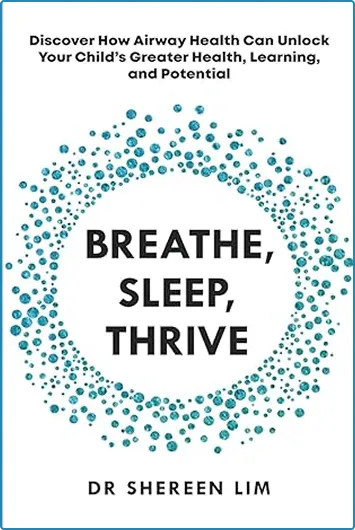
Why I Wrote Breathe, Sleep, Thrive

As a dentist trained in dental sleep medicine, I began by treating adult snoring and sleep
apnoea — including my own husband’s. But I realised: we were starting too late.

Most adult airway problems begin in childhood—and go unnoticed.

Breathe, Sleep, Thrive helps you:

  • Understand the roots of airway dysfunction
  • Identify red flags in infancy and childhood
  • Reframe “behavioural” symptoms as compensations
  • Start empowered conversations with parents

Bring Breathe, Sleep, Thrive to Your Clinic

Bulk orders (30+ copies) are available for team training, professional education, or clinic use.

Currently available for shipping to:

  • Australia
  • UK
  • USA
  • Canada
  • Germany

Reframe the Question

Instead of asking, “How do we manage this symptom?”

Ask: “How well does this child breathe, and what’s shaping their airway?”

This single shift could change the trajectory of a child’s health.

Help children breathe, sleep, and thrive — starting today
Because better breathing means better sleep, growth, and thriving futures
Connect With Us

Join a growing network of professionals committed to early, airway – focused care.

A New Question. A New Opportunity.

The question isn’t just ‘How do we manage this symptom?’
It’s ‘How do we promote optimal breathing and healthy growth — and give every child the chance to thrive?'”

“The earlier we recognise these signs, the more we can change a child’s future.
This book was created to support professionals like you — curious, compassionate, and ready to see more.

Together, we can help more children breathe, sleep, and thrive — for life.”

— Dr. Shereen Lim

Share with friends

Select your desired option below to share a direct link to this podcast.

Share To
Facebook
X
LinkedIn
Pinterest
Mail